Understanding Fort Wayne's Unique Soil and Climate Challenges
Homeowners in Fort Wayne face a specific set of environmental challenges when it comes to retaining walls. The region sits in the heart of Northeast Indiana, where heavy clay soil dominates the landscape. This clay-rich composition creates unique problems for any structure that must hold back earth, because clay expands when wet and contracts when it dries, placing enormous lateral pressure on retaining walls throughout the year.
Beyond soil composition, the freeze-thaw cycle that defines Fort Wayne winters adds another layer of complexity. Water infiltrates into soil, freezes, expands, and thaws repeatedly from November through March. This constant cycle can compromise weaker materials and cause premature failure if your retaining wall isn't constructed from the right materials. Choosing the correct material for your wall isn't just about aesthetics; it's about ensuring your investment lasts decades rather than years.
Concrete Retaining Walls: Durability Meets Modern Performance
Concrete Retaining Walls have become a top choice for homeowners across Northeast Indiana, and for good reason. Modern concrete formulations are engineered to resist the freeze-thaw cycles that plague the region. When properly installed with adequate drainage and reinforcement, concrete walls can withstand decades of seasonal stress without cracking or buckling. The material's compressive strength makes it ideal for holding back clay soil, which exerts significant pressure during wet seasons.
One of the biggest advantages of concrete is its versatility. You can finish concrete walls with various textures, colors, and stains to match your home's aesthetic while maintaining superior structural performance. Concrete also requires minimal maintenance compared to wood or other organic materials, and it won't rot, warp, or become infested with insects. For homeowners in Fort Wayne looking for a long-term solution, concrete offers excellent value. The initial investment may be higher than some alternatives, but the longevity and low maintenance needs make it cost-effective over time.
Segmental Retaining Walls: Flexibility and Strength Combined
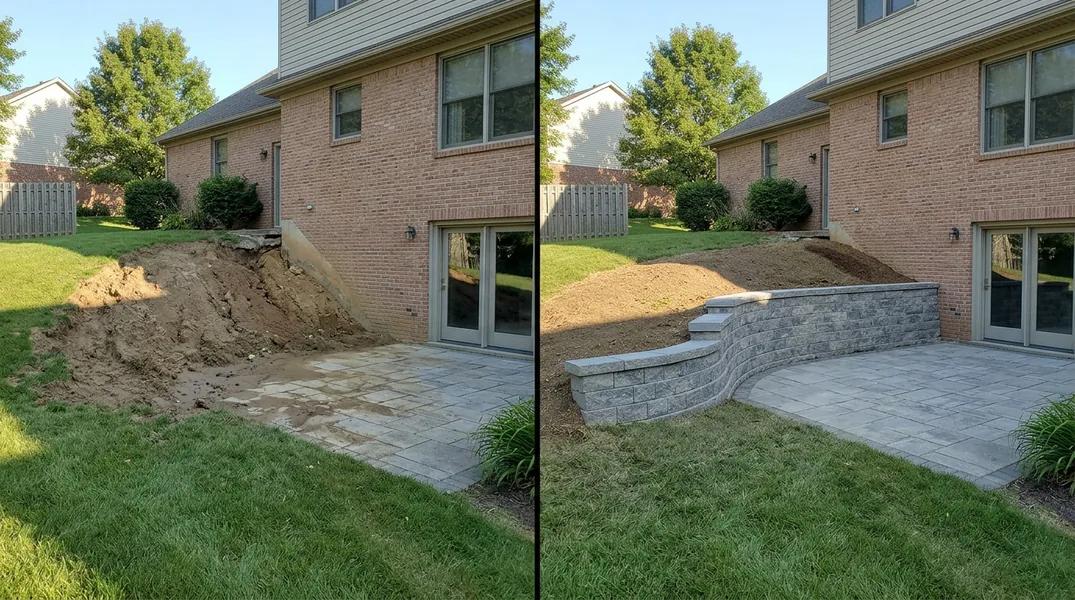
Segmental retaining walls, commonly called block retaining walls, offer a compelling alternative to poured concrete. These walls consist of individual concrete or composite blocks stacked and locked together, creating a system that can flex slightly without losing structural integrity. This flexibility is particularly valuable in areas with clay soil and freeze-thaw cycles, because it allows the wall to accommodate minor ground movement without cracking catastrophically.
The modular nature of segmental walls also provides practical installation advantages. Each block can be individually positioned and adjusted, allowing for precise construction even on uneven terrain or in tight spaces. If a single block becomes damaged over time, it can often be replaced without affecting the rest of the wall. Segmental walls also offer excellent drainage properties when installed correctly, which is critical for managing the water infiltration that causes frost heave in Northeast Indiana. The interlocking design and geogrid reinforcement create a composite structure that performs exceptionally well in challenging soil and climate conditions.
Limestone Retaining Walls: Natural Beauty with Proven Performance
Limestone is a natural choice for homeowners who want their retaining walls to blend seamlessly with the landscape while delivering reliable performance. This sedimentary rock has been used for centuries in construction and has proven itself in climates similar to Northeast Indiana's. Limestone's natural layering and texture provide aesthetic appeal that manufactured materials often struggle to match, giving your property a timeless, established appearance.
From a performance standpoint, limestone handles freeze-thaw cycles reasonably well when properly installed. The key is selecting high-quality stone and ensuring excellent drainage behind the wall. Limestone is porous, which means water can permeate it, so a well-designed drainage system is essential to prevent ice lens formation and frost heave. Many homeowners prefer limestone for accent walls or smaller installations where they can invest in premium stone selection and careful installation practices. If you're considering limestone for your property, working with an experienced contractor who understands Northeast Indiana's specific conditions is crucial to ensuring long-term success.
Block Retaining Wall Installation Near Me: Choosing the Right Contractor
Selecting the right material is only half the battle. Proper Retaining Wall Installation is what separates walls that last for decades from those that fail within a few years. In Fort Wayne, contractors who understand clay soil behavior and freeze-thaw dynamics are essential. They must know how to prepare the base, install proper drainage systems, and use reinforcement techniques that account for Northeast Indiana's specific conditions.
When evaluating contractors, ask about their experience with clay soil and freeze-thaw environments specifically. Have they installed walls that have survived multiple winters? Can they explain their drainage strategy? Do they understand how to compact clay base material properly? Fort Wayne Retaining Wall has extensive experience with all material types in this region and can help you understand which option makes the most sense for your property. We recommend calling (260) 286-8196 or visiting our site to discuss your project and understand how proper installation protects your investment.
Retaining Wall Installation Cost in Fort Wayne: What to Budget
The pricing for retaining walls varies significantly based on material selection, wall height, length, and site conditions. Concrete walls typically range from mid-range to premium pricing, depending on finish options and reinforcement requirements. Segmental block walls often fall in the mid-range, offering good value for the performance they deliver. Limestone walls can vary widely depending on stone quality and availability, sometimes commanding premium prices for high-grade material.
Beyond material costs, several factors influence your total investment. Site preparation, drainage installation, and soil conditions all affect labor and material requirements. Walls on steep slopes or in areas with poor drainage may require more extensive preparation and reinforcement, increasing overall costs. Rather than assuming one material is cheapest, consider the total cost of ownership over time. A more expensive material that lasts 50 years provides better value than a cheaper option requiring Retaining Wall Repair or Retaining Wall Replacement within 15 years. Contact Fort Wayne Retaining Wall for a free estimate tailored to your specific property and goals.
Looking for a professional retaining wall contractor in Fort Wayne? Fort Wayne Retaining Wall responds fast for all your retaining wall needs.
Get a Free QuoteOur services: Retaining Wall Installation · Retaining Wall Repair · Retaining Wall Replacement